Friday, 1 June 2012

A Clockwork Orange - Anthony Burgess

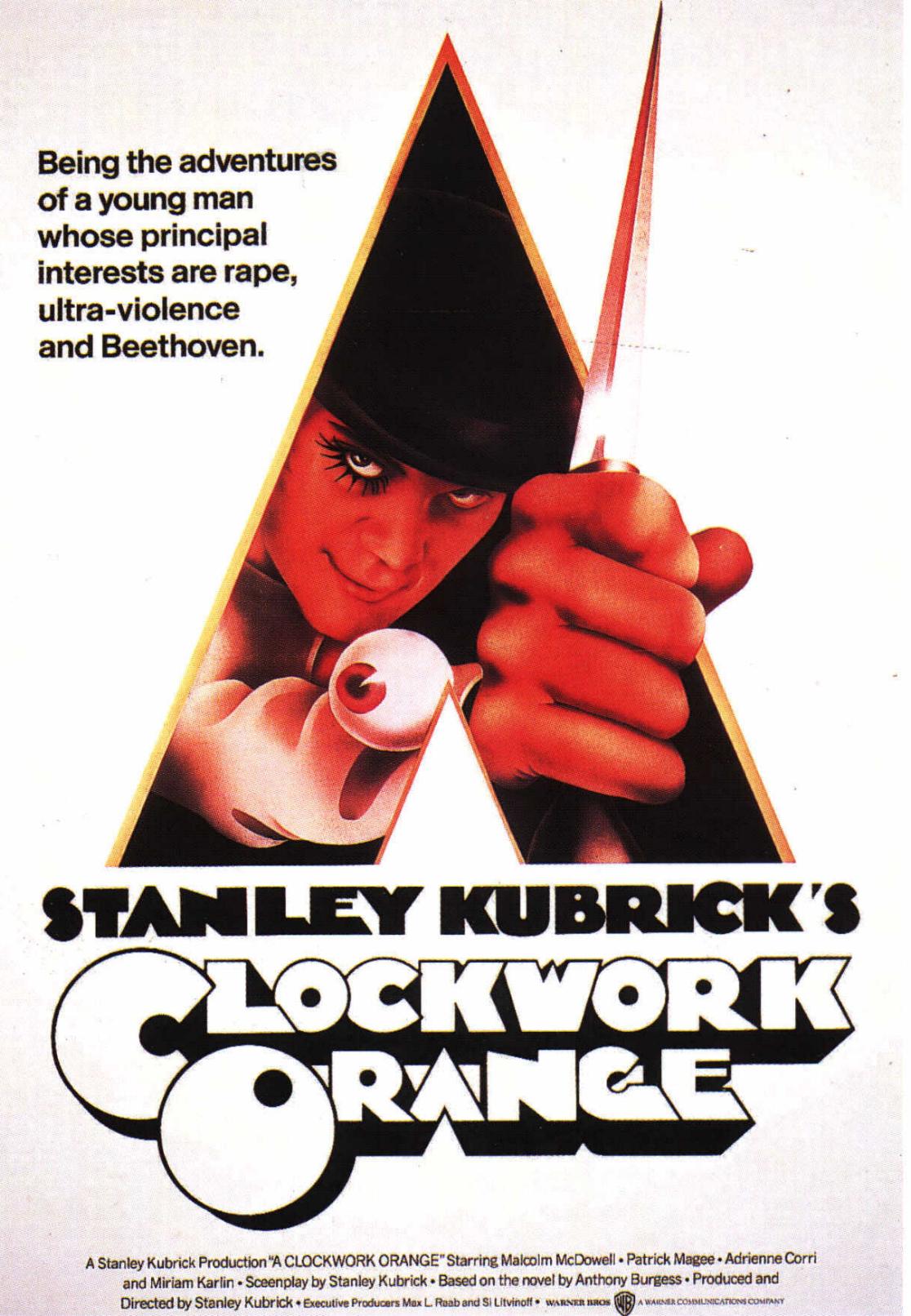
Part 1: The Film

It took me two attempts to watch this film. The first time I was dragged away unwillingly after getting half way through it, and in all honesty I'd have given anything to stay and complete it. Because of this Clockwork Orange shall be the first film I review here, as it was one of the most thrilling, funny, and dark films I've come across in a long while. 

The film opens with an entrancing shot panning out from the main character, Alex, in the futuristic Korovo Milkbar, whilst I was captured by his inner monologue that is the films introduction. The film is not a modern one, but the lack of fancy effects and technology have no great impact on the riveting story line. 

The Nadsat language from Anthony Burgess' book is kept throughout the film, and is made a lot simpler to follow than I believe it to be in the original text. The film is absolutely stunning and opens up the mind to questions of politics, misguided youth, and the inner workings of the human mind. The intelligent use of Mise-en-Scène and imagery along with the use of classical music made a perfect balance of grim humour and thought provoking scenes. 

Definitely one to watch, but possibly not for family viewing. 
Part 2: The Book

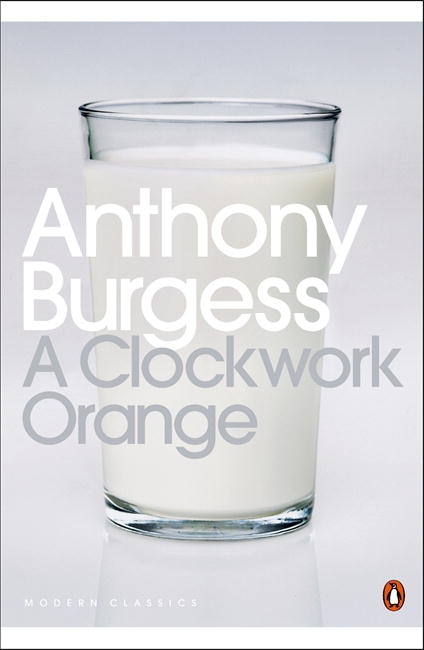
Despite only being halfway through the book I am already enthralled with Burgess' work. His writing style is impeccable. He also makes use of a tool that a lot of writers take for granted; Language. The book is written in first person from Alex's point of view and has its own individual teen slang language known as Nadsat, a type of future teen speak. An elegant mixture of Russian words, and school boy slurs, which after two chapters I am near fluent in. 

Due to his talent with language the dialogue in A Clockwork Orange is some of the most natural I have ever read in a piece of fiction. And dialogue is often overlooked, though it can really aid the imagery and the realism of the picture any writer is trying to paint in a readers mind, and Burgess paints his pictures perfectly. 

I recommend that lovers of Sci-Fi read this book.


Friday, 11 May 2012

Procession of the Dead - Darren Shan


Procession of the Dead

Darren Shan is one of my heroes, and has been since I was eleven and a friend leant me Cirque Du Freak. I've spent years reading his children's books, and I've loved them. Last Saturday Shan did a signing within reasonable range of where I lived, so I went to meet him for the second time in my life. Whilst there the same friend who leant me Cirque Du Freak recommended I begin reading the City Trilogy Shan's first adult works. Having spent so long reading Shan's children's books I was sceptical, especially after my friend commented that his adult works were so different from his children's books. 

I finished the book yesterday, and since then I've been looking for ways to comfort myself about not being able to buy the second until next week! I'm hooked. Once again Darren Shan has proven his talent, and I'm also glad to say that he is releasing a new one off adult book in August. 


Procession of the Dead follows a young wannabe gangster named Capac Raimi, who steps into the City. The City is a haven for criminals, but only those powerful enough to interest the Cardinal, an unofficial ruler of the city whose power can barely be fathomed. Capac is a relate-able character as he's not only a young man trying to make his way in the world, but is also one of the most realistic and believable characters I've come across in a fantasy or sci-fi novel, aside from maybe Lyra Belacqua  in the His Dark Materials trilogy. 

As I've mentioned this is the first adult Shan novel I've taken the time to read, and despite my uncertainty I was pleasantly surprised. A lot of Shan's work for children is quite obviously intended to turn the stomach of the reader, or shock them, or amaze them. However with this Shan managed to achieve a more controlled type of horror that played more on mystery and the readers own imagination and theories rather than showing the gore outright. He blurs the line between fantasy and reality perfectly to the extent that the reader believes the impossible. 

For those wanting to read the book I hope they enjoyed it as much as me, and I hope the first sentence makes them chuckle. 

Sunday, 22 April 2012

Mockingjay - Suzanne Collins


Mockingjay

Mockingjay is the last book in the Hunger Games trilogy. (I'm going to skip Catching Fire and possibly review that later.) At this point in the series I was as tired as the characters themselves. Tired, but still struggling through this awful rebellion against the Capitol. For those of you who have read the book I'm sorry to say that though the books were so emotional, especially Rue's death in the first book, I have always remained a Capitol fan. And Mockingjay simply turned me against the rebellion entirely.

Maybe it was the confusion of the ending that got me. It took several discussions with friends online and at school to decipher exactly what was trying to be portrayed in the final chapters. Another lot of confusion came from who was killing who and why. It seemed like a lot of trouble to go through when by that point the rebellion had pretty much happened. The death of Prim was expected by me, though apparently not by others, as she was just too clean a character to continue living in the dark book. It was Odair's death that hit me hardest.

Finnick Odair was the comic relief character seen in many thriller books (also a character I've seen a lot in anime) that despite their humour have a dark and tortured past that still affects them in the future. His character, he'd been through so much, that if I had been writing I would simply not have had the heart to have him die just before what he was fighting for was achieved. It was simply not in his character to die. Odair was a survivor. He survived the Hunger Games, twice, and even managed to train up and go back out to fight, after marrying the girl he loved, a girl he was kept from in the Capitol to keep up his sexual bad boy image. Odair really shouldn't have died, because when he did I lost faith in Collins' work so much that I barely even blinked when Prim died. 

Suzanne Collins seems to have really let her imagination run wild, without trying to reign herself in. It's obvious that the confusing ending that was perfectly clear in her head did not translate well onto the page. I marvel at the fact that her editors didn't feel the need to put a stop to this confusion. However, I expect they had no need to, as I'm still an avid Hunger Games fan, and have seen the film, and intend to see the other. Despite this headache inducing ending, the Hunger Games Trilogy is still a winner.

Friday, 13 April 2012

Prejudice, Racism, and Rue.

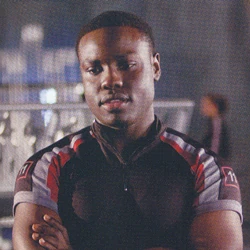
Here you will find a very interesting article on the racism of the character Rue from the Hunger Games trilogy. Something I was completely oblivious to until today, it also devastated me to read that one viewer claims that they weren't as upset when Rue died in the film because she was dark skinned, despite her being dark skinned in the book and me weeping like a child during both the book and film scenes of her death, with the same applicable to the other tribute from her district named Thresh.

Rue - The Hunger Games Film


However it did make me realise that I, despite being of Caribbean decent, am quick to assume that most characters are Caucasian unless stated otherwise. And that since I was a little girl my stories have been filled with Caucasian girls with blonde hair and blue eyes. And my one African character was a boy who worked for the Witch Queen Hecate as an essential slave! 

Thresh - The Hunger Games Film

I've decided to make an effort to read more literature featuring People of Colour and writing about it too, as I believe that they seem to be over looked, whilst black people in film are a much more sensitive issue as the film industry has a larger consuming audience, not much seems to be said about black people in literature, Asian people in literature, Chinese people in literature, or any ethnic minority. 

Quite frankly I find it a little disturbing and I'm disappointed, mostly in myself.

The Curious Incident - Mark Haddon

The Curious Incident of the Dog in the Night Time

The first time I read this book was in class in year nine and I enjoyed it immensely. It's about a young boy with behavioural problems (Most publishers say it's a type of Autism but I recently read an article about how Haddon became upset that he didn't specify autism so...) who decides to investigate the murder of the neighbours dog, only to uncover a lot of secrets kept by the supposedly trustworthy adults around him. 

Though the main character isn't exactly an expert on natural human emotion, Haddon uses this ignorance of his character to play around with the readers own emotions quite a lot. The reader ends up seeing more than the character Christopher due to their insight of emotion that Christopher lacks. Which left me crying at parts where Christopher would simply begin doing a maths puzzle in his head to distract himself from the seemingly unimportant things happening around him.

My only qualm with the book is the predictable story line. Haddon uses his writing style well to show Christopher's personality, but this seems to be the only unique thing about the book. The almost soap opera like secrecy and plot twists and turns are nothing that haven't really been done before. Leaving me believing that Haddon relied solely on his writing style, which was the product of a unique character. The plot line itself doesn't do much for me, though the characters and the emotion make up for it in that I've read it multiple times.

In all honestly I cried a lot at this book. And I would recommend reading it if you don't get too emotionally attached to books and characters, as whilst reading it I found that I wasn't the happiest of people. 

On an entirely different note my friend has Eragon. My brother has Eldest. I'm about to start Inheritance. And there's a sad empty space around my copy of Brisingr. Not to mention I spent forever looking up plot summary's for the first three books because it's been so so so long since I've read any of them, only to open the book and find a small prologue of the events from the previous books! It might be a long while since I post again, as Inheritance is quite long and I do have exams next month.

Elias xx

Sunday, 4 March 2012

The Hunger Games - Suzzane Collins


The Hunger Games

I don't know where to start with The Hunger Games. I shall start by saying that Suzanne Collins has a talent. For the first time in a long time I've really enjoyed a modern book. Most modern teen fiction have a certain focus on dark fantasy. Though this is fantasy it also has a strong sense of adventure, survival and rebellion. 

The main character, Katniss, is a very strong female character. After the loss of her father she looks after her depressed mother and young sister, hunting illegally in the woods by her home to keep them alive and trading her kills to make money. The one problem I end up having with Katniss is her stupidity in her cliché love triangle. Personally I believe that the love triangle sub plot did nothing for the main story line except to make it appeal to an audience, and I understand that, but it seems like an obvious desperate plea to get more Twilight loving little girls to read the books and buy into the franchise. The love triangle just doesn't match the characters personalities and makes the actual plot seem a little undermined and less important.

One thing I really did love was the use of first person and present tense to build the suspense of the story. Collins really knows how to keep the reader on their toes with her ability to build up the tension, and to refrain from any foreshadowing of the plot, so the reader doesn't know or even understand the climax until it slaps them in the face, metaphorically, of course. 

When I first bought the books there was a little mix up with the covers I wanted and I ended up with these covers: 


So I sold those to Leaf because I prefer the plain covers. Cover art is a big thing for me. It's become a habit of avoiding any movie covers or any covers that I call "over designed" much like the one above with too much going on, so I got the top ones, the ones I now love and cherish. I'll review the other two books soon, but until then I'll leave you with Hunger Games cupcakes. 


Enjoy!

Wednesday, 15 February 2012

Distractions for Teenage Writers


I haven't read much recently as I'm out of money to buy books, so we decided to do a video on Distractions. Sorry the quality's awful my web cam is terrible.


This is me (Elias) and my friend Leaf talking about the main distractions for teenage writers. I'm on the left, Leaf is on the right.
There's a longer, more hyper, version but we thought it was a little too long and too hyper.

Leaf's Book Blog


Sunday, 12 February 2012

Northern Lights - Philip Pullman


Northern Lights

"It's an alethiometer. It's one of only six that were ever made. Lyra , I urge you again: keep it private. It would be better if Mrs. Coulter didn't know about it."


The first time I read Northern Lights I was only nine years old. And since then Lyra has stayed a constant favourite in the list of my childhood characters that I just cannot get rid of. Many of my female characters in my writing reflect Lyra's tomboyish demeanour and headstrong ways with a lust for adventure and knowledge. Her character is well defined, though slightly predictable, and every young girl wants to be just like Lyra. Pullman has created a wonderful character in Lyra. 

Pullman's story structure is another brilliant achievement. The story flows in such a way that the main plot and sub plots intertwine like silk being woven. The plot keeps the reader on their toes and utterly entranced. Pullman has a superior talent with story telling that lets the reader step into a fresh new world that, even if they hate, they won't want to leave it. 

Another of Pullman's feats is the ability to write what is essentially a steampunk novel with the ability to capture so many imaginations. Young and old have read this book and enjoyed it enough to re-read it. Personally it's one of my most read books, though when asked my favourite, it sinks into the background. Pullman has created a book that is comforting and exciting at the same time. For once in my life I finished a book in a series then ran to grab the next book (The Subtle Knife). Yet still I haven't finished the third book (The Amber Spyglass) for fear of running out of my Lyra dose that I must have when I'm sick, upset, happy, or just bored. This is the ultimate feel good book for children and adults alike.

Northern Lights amazing for anyone who loves to read I recommend it entirely, as well as the other books in the series, which I will review soon.

Friday, 27 January 2012

Writers Block or Procrastination?

As I write this I know that I should be working on my most recent short story, but there's nothing. I know I can write, there's an idea in my mind, there's words to put on the page. I've never been without anything to write or scribble down. But some of the time I just don't have it in me to write anything on the page.

Writer's Block is usually not having an idea, not having any inspiration, not being able to do anything related to writing. There is a wall standing between the writer and the page, something is seriously stopping them from getting their words down.
Procrastination is avoiding what you know you need to be doing, by giving pointless tasks priority over the original. But sometimes I find it difficult to separate the two. However, this time I know it's procrastination, as I'm sitting here talking to you.

Wednesday, 18 January 2012

Writer's Homes.

5 Writers homes that should be visited.

Of Mice And Men - John Steinbeck


Of Mice And Men

"They had walked in single file down the path, and even in the open one stayed behind the other. Both were dressed in denim trousers and in denim coats with brass buttons."
Of Mice and Men is a fairly short tale of a friendship between a caring George and a child minded Lennie. As seen in the quote above even their dress shows the strength of their bond together, despite Lennie taking a submissive role in the friendship. The story starts with George promising Lennie a life of happiness and tranquillity with all the rabbits and puppies he can pet. But the story takes a tragic turn just as their plans of happiness start to come together and their lovely plans aren't followed through.

Because the book is so short and there wasn't much time for Steinbeck to develop his characters very much, but this doesn't have any affect on the novel's impact on the reader. The characters don't need to learn a lesson from it, the story just needs to be told, and Steinbeck does just that. He tells the story, and he does it with strong emotion. So much emotion packed into one little book left me a little shell shocked and stricken.

Lennie's character is by far my favourite, though that may be because he is the most detailed character. He is a large strong man with the mind of a small child. Because of his naivety Lennie often finds himself in trouble and most of the time it is at George's expense. The thing that made me really love Lennie's character is his love for George and his certainty that George will always come back to him and always take care of him, and the irony in this towards the end of the book.

Another character in the book is Curley's unnamed wife, now I don't know if I like or dislike her character but she does make a good point in the book! She talks about how she's kept from her dreams of acting and ends up married to a man she doesn't like, and is kept in a house to wait for him and not to talk to the other men on the ranch. She's lonely being married to Curley and she wants to talk to other people, but the men on the ranch assume she's being a bit promiscuous, when in reality she's lonely and upset and just needs a nice chat. In essence she's a character who doesn't make a large appearance in the book, but does make a good point about feminism and the prejudices against women.

This is a very emotional and easy read and I look forward to reading more of Steinbeck's work, as I think his prose flows nicely and is a great comfort.

Book Lover Site Seeing

10 Libraries and Bookshops you must see before you die.

This is basically my bucket list now.

Monday, 16 January 2012

On The Road - Jack Kerouac

On The Road

"I was beginning to get the bug like Dean. He was simply a youth tremendously excited with life, and though he was a con-man, he was only conning because he wanted so much to live and to get involved with people who would otherwise pay no attention to him."
Jack Kerouac's ground breaking novel On The Road was the birth place of the beatnik generation. The book is autobiographical with Sal (Jack Kerouac) Paradise and Dean (Neal Cassedy) Moriarty and their series of trips across America. Beatnik's were famous madmen. They drank and wrote poetry and freaked out to bebop records. They were jazz poet's who loved the blues and made the most of life whilst they were young. Kerouac not only began the beat generation, but captured it's essence perfectly in this novel.

On The Road is written in first person narrative, which allowed me to make a real connection with Sal's emotions and views. Despite this it didn't detract from the emotions of other characters. All the other characters are seen with such realism through Dean's eyes that it didn't strike me as being biased or one sided on Sal's part letting me develop my own feelings towards the characters regardless of Sal's thoughts.

For this particular novel I think it's important to point out that my favourite character was Dean Moriarty, who is a character that I'd usually hate. Throughout the novel Dean does everything wrong. He has failed marriages, several children that he doesn't see, he abandons his friends, wives and girlfriends. He gets drunk and he has a tendency to stay up all night and drive like a first class mental patient. But his character is the embodiment of everything I want to be. He's a lover, a traveller, a philosopher, and on top of it all he's widely impulsive and doesn't care for the consequences. Dean is what everyone wants to be but is too scared to become.

All in all I love this book, and it will travel with me like Sal did with Dean.

Friday, 13 January 2012

Literary Musings: The Joy of Books

Literary Musings: The Joy of Books: This video has been making the rounds and I wanted to share it with those of you who haven't yet seen it. Filmed at a bookstore in Toronto, ...

The Perks of Being a Wallflower - Stephen Chbosky


The Perks of Being a Wallflower

"So, this is my life. And I want you to know that I am both happy and sad and I'm still trying to figure out how that could be."

The Perks of Being a Wallflower is another favourite of mine, the story is written as a series of letters from fifteen year old freshman Charlie to a 'friend' (the reader). Charlie writes his letters in an almost stream of conciousness style, making it a cult novel similar to that of the Catcher in the Rye, making it almost an immediate favourite of mine. Charlie's character is a reclusive sort of bookworm, he befriends a group of senior students and his letters are a record of his friendship with them. 

The book highlights a series of teenage issues, such as sex, drug abuse, drinking, homosexuality, bullying, and family issues. However the one topic I favoured throughout the novel was the importance placed on friendship despite the age differences between the characters. Throughout the novel the characters seem to watch out for each other despite what happens. They buy each other the most wonderful thoughtful presents for different events, they look out for each other and when Sam goes through her boyfriend cheating on her they band together and they care for her, when Charlie becomes sick towards the end of the novel they go to visit him in hospital. When on a drive with Patrick and Sam, Charlie says, "And in that moment, I swear we were infinite" which is just how friendship makes someone feel, especially at such a young age.

Chbosky's classic coming of age tale, despite being a little depressing, actually made me feel brilliant after reading it. In a sense the novel made me realise the joys of being young, that we are free to make mistakes and still live through it. The sub plots of the book are a wonderful mixture of traditional teenage mess ups and perks, allowing for some insight into the joys of being young and the need to take hold of life.
Upon comparing this teenage novel to self help books, I think Chbosky comes out on top. 

Thursday, 12 January 2012

eReaders

eReaders seem to be a sensitive subject amongst book lovers. Those who abandon their beloved bookshelves and page sniffing are ridiculed, and those who abandon kindles and sony eReaders are praised. Or that's how it seems to me. Of course the eReader is just a matter of personal choice and opinion.


Christmas 2010 I was awarded with an amazon Kindle. My weekly allowance was being spent on books (coffee too) and my parents were sick of me buying classics that are free online. So I tried it out. I read Carmilla by Joseph Sheridan Le Fanu using my amazon kindle (I'll post a review later) and I hated it with a passion. There was a lack of physicality to the book, the lack of cover art made me uncomfortable, and the thinness of it made it strange to hold. Call me a traditionalist but holding a book and wandering through book shops is a big part of my life, so the kindle just wasn't for me. 
It's also not ideal for a child as the internet access means it's not allowed in school so I had to carry another book to school when I was getting into Carmilla, which annoyed me slightly. 
So after a few months of it gathering dust under a pile of real books my father asked to use it and he has had it ever since. It now belongs to him and he got me a larger book case (spoilt, aren't I?), but my parents still pressure me to buy eBooks every other week to save some money for Uni. And though I can see their point I don't see having an eBook as owning a book and would just have to buy the eBooks physical copies as I did when I owned the kindle myself.


My English teacher I'm aware does own a kindle (discussed at parents evening after I'd made what I thought was an impressive speech about hating eReaders, needless to say my English Language mock exams didn't go well) and she loves it. And I can see why she does love it of course. Of course they're practical for book lovers with busy lifestyles who don't always have the time to waste a Saturday wandering through Waterstones, or for those who can't waste money on books for a long term investment eReader users will actually save a fortune. The same concept applies to students, textbooks can be brought or downloaded for a lot cheaper than physical books, which saves time, money, and space! 

I've made a rule for myself not to dismiss anyone who owns an eReader as a fool, because it's prejudiced. Reading is a different experience for everyone and it isn't up to others to judge something as personal as loving books.

Wednesday, 11 January 2012

The Picture of Dorian Gray - Oscar Wilde


The Picture of Dorian Gray

"I knew that I had come face to face with someone whose mere personality was so fascinating that, if I allowed it to do so, it would absorb my whole nature, my whole soul, my very art itself." 

Oscar Wilde's most renowned masterpiece is as fascinating as the painting of Dorian. Like the painting itself the book highlights the tender subject of appearance versus intelligence. The beautiful young Dorian Gray is immortalised, literally, in a painting by an artist Basil who dotes on Dorian for simply his beauty. But the quick witted and interesting Lord Henry sweeps young Dorian off his feet and leads him astray. Whilst each of Dorian's sins are reflected in his painting, Dorian remains young and beautiful, continuing his life of sin for years and years, until it becomes his downfall.


The Picture of Dorian Gray is such a quick easy read, and I found myself caught up in the story line, feeling almost as sinful as Dorian for enjoying his devastating acts of heartbreak and pseudo self abuse. Wilde's writing style is descriptive and a pure embodiment of classic prose, with excellent use of dialogue and description that made me feel as though I was walking alongside the characters, watching their activities. It's quickly made it's way into my favourite book list, and I intend to purchase more of his works.

1984 - George Orwell


1984

"April the 4th, 1984. To the past, or to the future. To an age when thought is free. From the Age of Big Brother, from the Age of the Thought Police, from a dead man... greetings."

1984 by George Orwell is a haunting insight into the future. It was first published in 1949, and held Orwell's ideas of what would occur by the time of 1984. In this faux future nothing is private. Big Brother watches everyone and everyone watches their neighbours. Constant war between the countries keeps the population following serious patriotism, those who breach any of the rules or become too interested are wiped from history, young girls are encouraged to join the anti sex league, and human language is being whittled down to "New Speak" consisting of the bare minimum of words. 

The book is the tale of Winston Smith and his efforts at rebelling against Big Brother, his forbidden romance with colleague Julia, and his battle with the ever present Thought Police. Winston and Julia go on a mission to find blind spots that Big Brother can't see.
Orwell writes the book in third person narrative, however I lost no connection with the characters. The story doesn't lose any of it's raw emotion or atmosphere. I found the characters to be realistic, there weren't any idealistic character traits that made the characters beyond my reach of logical understanding. 
The most frightening thing about the book is that most of Orwell's prediction's have come true. Orwell made me question just how protected my privacy really is, without really dictating the question directly. I enjoyed the book immensely and look forward to reading Orwell's other works.
It is a must read for any book lover.

Sunday, 8 January 2012

The Catcher in the Rye - JD Salinger


The Catcher in the Rye
"Anyway, I keep picturing all these little kids playing some game in this big field of rye and all.  Thousands of little kids, and nobody's around - nobody big, I mean - except me.  And I'm standing on the edge of some crazy cliff.  What I have to do, I have to catch everybody if they start to go over the cliff - I mean if they're running and they don't look where they're going I have to come out from somewhere and catch them.  That's all I do all day.  I'd just be the catcher in the rye and all.  I know it's crazy, but that's the only thing I'd really like to be." 

I regret to inform you that my favourite book is the admittedly slightly overrated The Catcher in the Rye. I have a certain readiness to disregard this book as teenage nonsense, as we all know that Holden Caulfield is just a whiny little rich boy, but I can't just leave it in the dust of my bookshelf. It is an amazing book. Though what I've found is that if you don't read it as a teen you'll hate it forever.
The book follows the path of Holden Caulfield a sixteen year old boy who is kicked out from school for failing every class (except English), and doesn't have the guts to go home to see his parents until they have received the letter from his parents, and is a record of descent into some unspecified illness, that the reader (or well I) assumes is depression.
The story is told in stream of conciousness following each of Holden's thoughts. Salinger's style allows the reader (again, me) to see directly into Holden's head, and after a while it doesn't matter that I hate Holden or that I like him, only that I can feel a connection with him. Now, I don't know about anyone else who's read this book, but I adopted Holden's speech patterns, and still hold some of his phrases to me. The phrase, "That killed me" and "Crumby bastard" are never far from my lips. 
Though the book is depressing, it's an enjoyable and easy read. For slower readers it might take a week, for faster readers about a day. The book will stay with the reader for their whole lives, but as I've said, I recommend it to teens, as adults, quite rightly so, seem to hate Holden's seemingly mindless rambling.