Tuesday, 28 January 2014

The Wolf Gift - Anne Rice

The Wolf Gift by Anne Rice


Like all teenage vampire enthusiasts I have read Interview with the Vampire by Anne Rice, and found it incredibly enjoyable. Can you imagine my excitement when I discovered (at the height of my werewolf mania, no less) that Anne Rice was beginning a new horror series based entirely around werewolves. 
I opened the book, unsure what to expect, and devoured the story like the werewolf Reuben devoured so many unsuspecting victims. 

Rice's new take on the werewolf myth was fascinating and very enjoyable to read. There were a few things I really did enjoy about this book, but the main two were the varied, interesting characters, and the brilliantly fun werewolf genesis story. The characterisation was done so artistically, even those who were absent for most of the story were changed the more we saw through Reuben's eyes and I developed a real attachment, and any werewolf will tell you that a good ol' fashioned wolf pack will have a character to cater to pretty much anyone, so I suffered no disappointment there! 

The werewolf genesis myth, much like her vampire genesis myth was amazingly original and exciting to read! I'm such a nerd about myths and folklore so I'm particularly partial to things like this, but either way, it was still very interesting. Rice found an excellent mix between science and religion for her werewolves with a great mixture of both religious and atheist werewolves to shed light on both sides. 

The one thing that Rice might have done better was the pace of the book. Granted, being forty chapters long it's difficult to keep an exciting pace and get in everything you feel necessary to the plot but, especially at the start, there was a lot of not-very-much-happening chapters. Of course by the end Rice had me entirely enthralled once again, biding her time perfectly, convincing me to buy the second book as soon as I possibly can, which I hope is very soon!

Saturday, 25 January 2014

Enduring Love - Ian McEwan

Enduring Love by Ian McEwan


This intense tale woven by McEwan is a disturbing look into the true horrors of obsessive love. Put frankly, it terrified me. The story follows a man named Joe Rose, a scientific journalist, who lives with his wife quite happily, until one day a horrifying hot air balloon crash brings him across Jed Parry, a delusional young man who believes Joe was brought into his life by a higher power. As the book progresses Parry becomes more and more unpredictable and he unravels Joe's life, driving him to manic paranoia and forcing Joe away from his family. 

Though this book is incredibly haunting and frankly quite worrying, I read it in one day. McEwan's style immediately had me hooked, and I know that it is rare to find an opening chapter as thrilling and as gripping as the one presented in this book. This book offered a lot on insight to how the workings of the human psyche can be used to mould a plot, though it's used to the extreme, in that Parry's obsessive disposition is the entire plot, it was really well done, without demonising Parry too much. 

I usually find it difficult to get into many contemporary romances that aren't teen literature (I'm too scared to grow up, clearly) but I found this to be a great new take on love, or more specifically the dangers of love. Those who are a great lover of typical romance probably wouldn't get much of a kick out of it, but if you want to explore the typical Romeo and Juliet turned on its head, reshaped, and burned and have an un-see-able look at love rise from its ashes; I would highly recommend you read this book. 
It's difficult for me to think of a reason someone wouldn't love this book! There's no way I can praise it enough, and would widely encourage everyone I meet to read it. McEwan just makes this novel so interesting and so accessible that any lover of any book ever should read this. 
In short, this was the first of McEwan's work I've read, and I was not disappointed. 

Thursday, 12 September 2013

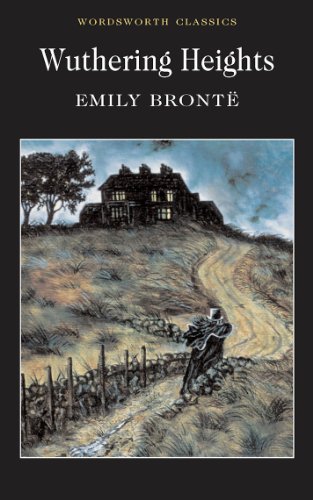
Wuthering Heights - Emily Bronte

Wuthering Heights by Emily Bronte


Wuthering Heights was my first taste of Bronte literature, and I was certainly not disappointed. This intense gothic novel was so powerful and interesting it was hard to believe that when it was originally published it was met with scorn, then again, what great books don't have their hardships? I found it very unfortunate that this was Emily's only novel, published only a year before her death in 1848. 

It's rare to find a novel that gives the reader an immense amount to think about but actually flows considerably well. Told through the point of view of Nelly to Mr Lockwood, with the occasional input of Isabelle Linton's letters, it shows many different points of view and offers a tapestry of symbolism and emotion I'm just dying to prod and pick at. 

Mr Lockwood moves to the vast expanse of the Yorkshire moors to escape from society after driving the love of his life away, only to meet the mysterious Mr Heathcliff who lives with the strangest, rudest people Lockwood has ever met. Returning to his home after introducing himself to his neighbours he falls ill and asks Nelly, his housekeeper who grew up with Heathcliff, to recount the story. We then travel a whole lifetime back to the beginning of the story. And we are then told one of the most tragic love stories in classic literature, which I believe (which I hope) was enough to deter Lockwood from travelling the same road as Heathcliff did. 

I would love to give more away, but for those who haven't read it I wouldn't like to reveal only part of the tapestry, it's much more impressive when viewed all together. However I will say that the imagery and symbolism in the book was immensely thought provoking. 

The story is woven together so beautifully, and so intricately that it will give you an intense, but enjoyable reading experience. For those who intend to read this brilliant gothic novel, expecting a typical love story between Heathcliff and Cathy, I would advise you to not put down the book if you don't see what you were expecting, and to power through to the brilliant ending. 

Saturday, 6 July 2013

A Monster Calls - Patrick Ness

A Monster Calls by Patrick Ness


This book was a truly fascinating read. Bought for me in a bout of illness, I didn't actually manage to read it when I first got it. But recently, around college, there has been a burst of activity surrounding this book, with a lot of the English teachers reading it. So I thought I'd give it a go. And I am very glad I did.

A Monster Calls has resonated deeply with me, in a way only a few books do in a persons life time. It was gripping, and dark, with an element of folklore and fear entwined. It may have been this slither of folklore that actually made me like it so much; For once in a book I've found the names of 'Herne the Hunter' and 'Cernnunos' side by side, without a page long explanation of who they are. It felt as though I wasn't being patronised.

The personal note aside, the story, and the narrative were brilliant. I read it in one afternoon, completely sucked in by the story line and the characters I found myself unable to put it down. Despite the book touching on issues such as cancer and bullying they aren't used to make the audience feel. The darker experiences of the main character, Conor, lead the reader to feel for him more than his situation, which I believe can be quite difficult to do, as most people would reflexively decide on their feelings where Conor's situation was concerned.

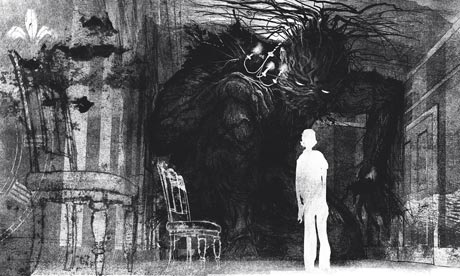
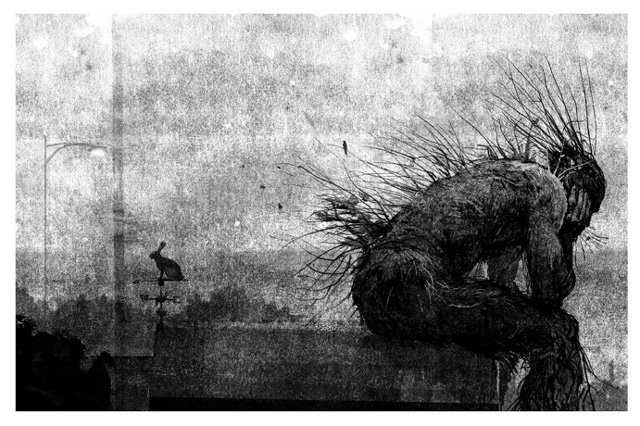
I'm reluctant to give away the story in any way, but I feel that artwork of Jim Kay cannot be easily ignored. The book is filled with dark, hauntingly beautiful images that work so beautifully with the story that I finally had a book to discuss with my father (a lover of art).


Because of this astounding artwork I feel the book has a certain appeal to both avid readers, art lovers, and anyone in between. But even without the genius of Jim Kay, I felt that Patrick Ness successfully created artwork of his own in this original and emotional narrative.

Friday, 1 June 2012

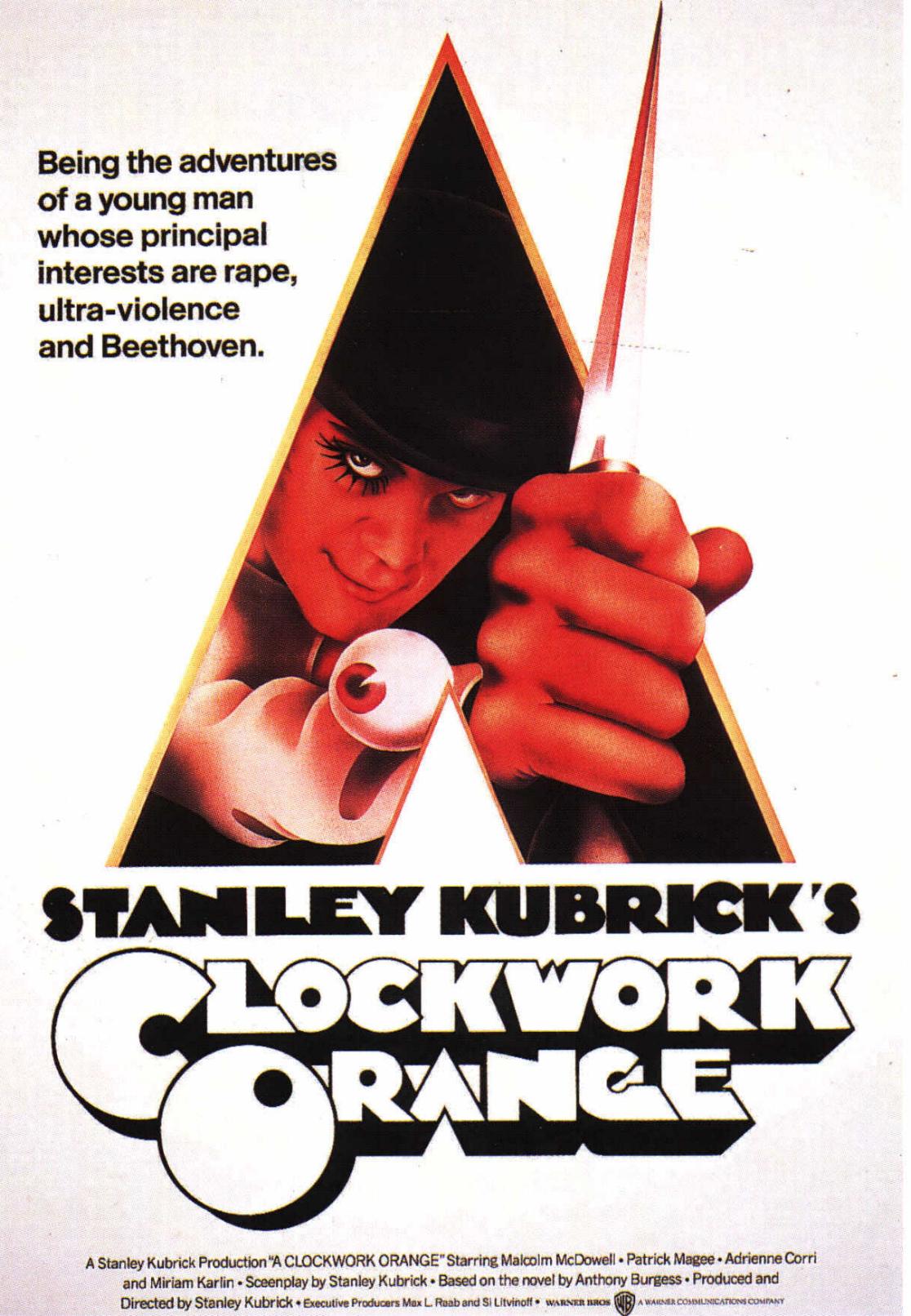
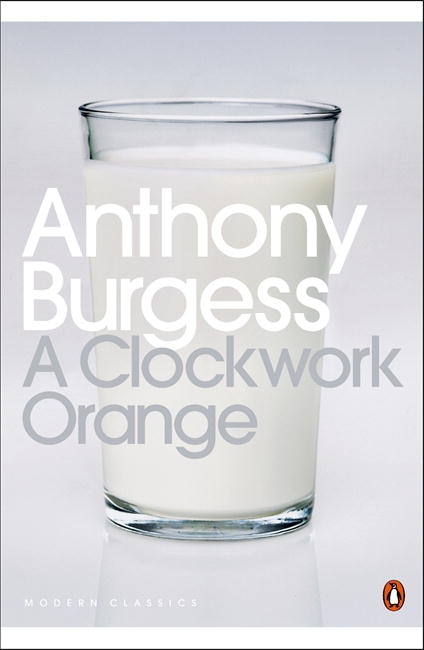
A Clockwork Orange - Anthony Burgess

Part 1: The Film

It took me two attempts to watch this film. The first time I was dragged away unwillingly after getting half way through it, and in all honesty I'd have given anything to stay and complete it. Because of this Clockwork Orange shall be the first film I review here, as it was one of the most thrilling, funny, and dark films I've come across in a long while. 

The film opens with an entrancing shot panning out from the main character, Alex, in the futuristic Korovo Milkbar, whilst I was captured by his inner monologue that is the films introduction. The film is not a modern one, but the lack of fancy effects and technology have no great impact on the riveting story line. 

The Nadsat language from Anthony Burgess' book is kept throughout the film, and is made a lot simpler to follow than I believe it to be in the original text. The film is absolutely stunning and opens up the mind to questions of politics, misguided youth, and the inner workings of the human mind. The intelligent use of Mise-en-Scène and imagery along with the use of classical music made a perfect balance of grim humour and thought provoking scenes. 

Definitely one to watch, but possibly not for family viewing. 

Part 2: The Book

Despite only being halfway through the book I am already enthralled with Burgess' work. His writing style is impeccable. He also makes use of a tool that a lot of writers take for granted; Language. The book is written in first person from Alex's point of view and has its own individual teen slang language known as Nadsat, a type of future teen speak. An elegant mixture of Russian words, and school boy slurs, which after two chapters I am near fluent in. 

Due to his talent with language the dialogue in A Clockwork Orange is some of the most natural I have ever read in a piece of fiction. And dialogue is often overlooked, though it can really aid the imagery and the realism of the picture any writer is trying to paint in a readers mind, and Burgess paints his pictures perfectly. 

I recommend that lovers of Sci-Fi read this book.


Friday, 11 May 2012

Procession of the Dead - Darren Shan


Procession of the Dead

Darren Shan is one of my heroes, and has been since I was eleven and a friend leant me Cirque Du Freak. I've spent years reading his children's books, and I've loved them. Last Saturday Shan did a signing within reasonable range of where I lived, so I went to meet him for the second time in my life. Whilst there the same friend who leant me Cirque Du Freak recommended I begin reading the City Trilogy Shan's first adult works. Having spent so long reading Shan's children's books I was sceptical, especially after my friend commented that his adult works were so different from his children's books. 

I finished the book yesterday, and since then I've been looking for ways to comfort myself about not being able to buy the second until next week! I'm hooked. Once again Darren Shan has proven his talent, and I'm also glad to say that he is releasing a new one off adult book in August. 


Procession of the Dead follows a young wannabe gangster named Capac Raimi, who steps into the City. The City is a haven for criminals, but only those powerful enough to interest the Cardinal, an unofficial ruler of the city whose power can barely be fathomed. Capac is a relate-able character as he's not only a young man trying to make his way in the world, but is also one of the most realistic and believable characters I've come across in a fantasy or sci-fi novel, aside from maybe Lyra Belacqua  in the His Dark Materials trilogy. 

As I've mentioned this is the first adult Shan novel I've taken the time to read, and despite my uncertainty I was pleasantly surprised. A lot of Shan's work for children is quite obviously intended to turn the stomach of the reader, or shock them, or amaze them. However with this Shan managed to achieve a more controlled type of horror that played more on mystery and the readers own imagination and theories rather than showing the gore outright. He blurs the line between fantasy and reality perfectly to the extent that the reader believes the impossible. 

For those wanting to read the book I hope they enjoyed it as much as me, and I hope the first sentence makes them chuckle. 

Sunday, 22 April 2012

Mockingjay - Suzanne Collins


Mockingjay

Mockingjay is the last book in the Hunger Games trilogy. (I'm going to skip Catching Fire and possibly review that later.) At this point in the series I was as tired as the characters themselves. Tired, but still struggling through this awful rebellion against the Capitol. For those of you who have read the book I'm sorry to say that though the books were so emotional, especially Rue's death in the first book, I have always remained a Capitol fan. And Mockingjay simply turned me against the rebellion entirely.

Maybe it was the confusion of the ending that got me. It took several discussions with friends online and at school to decipher exactly what was trying to be portrayed in the final chapters. Another lot of confusion came from who was killing who and why. It seemed like a lot of trouble to go through when by that point the rebellion had pretty much happened. The death of Prim was expected by me, though apparently not by others, as she was just too clean a character to continue living in the dark book. It was Odair's death that hit me hardest.

Finnick Odair was the comic relief character seen in many thriller books (also a character I've seen a lot in anime) that despite their humour have a dark and tortured past that still affects them in the future. His character, he'd been through so much, that if I had been writing I would simply not have had the heart to have him die just before what he was fighting for was achieved. It was simply not in his character to die. Odair was a survivor. He survived the Hunger Games, twice, and even managed to train up and go back out to fight, after marrying the girl he loved, a girl he was kept from in the Capitol to keep up his sexual bad boy image. Odair really shouldn't have died, because when he did I lost faith in Collins' work so much that I barely even blinked when Prim died. 

Suzanne Collins seems to have really let her imagination run wild, without trying to reign herself in. It's obvious that the confusing ending that was perfectly clear in her head did not translate well onto the page. I marvel at the fact that her editors didn't feel the need to put a stop to this confusion. However, I expect they had no need to, as I'm still an avid Hunger Games fan, and have seen the film, and intend to see the other. Despite this headache inducing ending, the Hunger Games Trilogy is still a winner.